In Abu Dhabi's business landscape, there are its own specific demands around ISO accreditation, which is shaped by the high number of large industrial operators, and strict demands for tendering. For local businesses that are trying to get ISO this certification journey for the first, understanding the practical realities specific to Abu Dhabi makes the process considerably simpler and daunting.Government and Semi-Government Tenders Establish the Rules
The majority of Dubai's economy relies on large industrial companies, many of which have formalised ISO certification as a prequalification requirement to suppliers and contractors. The determination to obtain certification is typically driven less by internal ambitions and more by the practical reality of which contracts a business wishes to remain eligible for.
The Energy and the Industrial sectors have Particular expectations
The energy and the industrial sectors have extremely strict standards concerning environmental and safety due to the size and the risk profile of activities in these areas. Companies that supply into this industry directly, or indirectly, can discover that the requirements for certification from their customers directly are more strict than standard requirements, reflecting the company's internal business culture regarding risk and management.
Making a choice that's compatible with Your Actual Operations
One common mistake is attempting to get a certification when one of your competitors has it, without first determining whether the certification best matches the firm's requirements and risk profile. The goals of a logistics company are very different from those of a management company for facilities, and starting with a clear-eyed examination of the requirements that clients and tenders actually require helps avoid in the long run.
This Gap Assessment Stage Is It's worth taking seriously
Before the formal implementation process begins, a proper gap assessment with respect to the applicable standard shows the degree to which current practice aligns with requirements and where some work is needed. This stage is often skipped or overly rushed. results in a more lengthy process that is more expensive later on because the gaps that may have been spotted early instead surface unexpectedly during the audit of the audit.
Documentation Requirements Have More Control than They Sound
A majority of new applicants believe ISO documentation requirements are difficult to meet, but modern management systems are less prescriptive in their approach to paperwork as the previous ones were focusing instead on demonstrating that processes are actually implemented instead of just being documented. A pragmatic approach for documentation which is based on what a organization would want to record regardless, will result in an actual system instead of one designed just for audit purposes.
Local Support Options have gotten bigger Definitively
Abu Dhabi now has a significantly larger pool of consultants and certification bodies with genuine local sector knowledge that it had just 5 years ago, thus reducing the requirement to rely only on foreign companies with no local knowledge of the local context. This expansion of local expertise has improved the speed of process and more responsive to specifics of operating in the Emirate.
Maintaining certification requires a continuous commitment.
Certification isn't an isolated achievement it's an ongoing commitment, requiring regular surveillance audits that are usually each year, to determine if the management system is maintained. Companies that view the initial certificate as the end of the line rather than the starting point are often unable to pass subsequent audits. Businesses who translate the requirements of the standard into their everyday practice will discover recertification to be much simpler.
Free Zone Businesses are subject to Particular Risks
Businesses operating from Abu Dhabi's numerous free zones sometimes assume certification requirements differ in comparison to those applicable to mainland businesses, but the fundamental international standards remain in the same way regardless of where they are located. However, what does differ is specific client and tender requirements within each free zone's tenant's community, something worth discussing with authorities of the free zone or prospective clients, rather than taking they are all the same.
Budgeting in a Realistic Way for the Whole Process
First-time applicants typically budget for the audit fees that is not taking into account the internal time investment, the potential consultants' fees, as well as any operational adjustments that are needed to close those gaps in the assessments. A sensible budget will account for the entire course of action from beginning assessment to certificate award, not only that final invoice for audits, to avoid an unpleasant surprise partway through the project.
Timing Certification for Business Cycles
Businesses with clear seasonal peak such as those in the construction or sector related to events, often are able to plan the more intensive process of audit and implementation during quieter periods, rather than trying to coordinate an audit project during peak operational demand. The Abu Dhabi-based certification bodies are generally flexible about setting their timings, and elevating preferences early in the process is likely to produce a smoother experience for everyone who is involved.
Learning From Businesses That Have Recently Been Through It
Connecting directly to other Abu Dhabi businesses in a similar field who have achieved certification frequently reveals specific insights that no consultant or certification body is able to freely share, with respect to realistic timeframes and aspects of the audit tend to catch prospective applicants off in the dark. The peer perspective can be very valuable and worth making sure to look for before signing to a particular company or timeline.
Working With Government Liaison Requirements
Businesses who seek certification specifically in order in order to be eligible for government-issued tenders which are held in Abu Dhabi should confirm exactly what scope of certification as well as the standard version that a particular tender requires due to the fact that requirements sometimes refer to specific editions or additional local standards that are different from the base international standard. Making sure to confirm this information with the tendering authority prior to initiating the certification process can help avoid the risk of completing certification against the wrong scope entirely.
In the case of Abu Dhabi businesses approaching certification for the first time, success generally depends on selecting the best standard to match operational reality, while taking the phases of preparation seriously, as well as using certification as an ongoing operational discipline instead of simply a checkbox to tick once and forget. Abu Dhabi businesses that approach certification with this level of effort, rather than using it as a last-minute tender to rush through, typically end up with a stronger, more beneficial management system after the end of the process. This process doesn't have to be taken on by oneself, since Abu Dhabi's expanding pool of local experts and certification bodies ensures that genuinely competent assistance is more readily available than it was in the past. Utilizing the growing local expert base makes the entire process far more manageable than was in the past. Check out the recommended ISO 9001 Certification for website examples.

ISO 14001 Certification A Reason To Use Iso 14001 Certification Environmental Management Imports For Uae Companies
Environmental issues have shifted from an issue of a minor concern to the forefront of business priorities across the UAE in part due to the national commitment to sustainability and due to the increasing demands of clients and regulatory expectations. ISO 14001, the international standard for environmental management systems, has become a natural response in companies looking to demonstrate true, solid environmental responsibility rather than merely good goals alone.What ISO 14001 Actually Requires
The standard asks businesses to identify the environmental aspects of their operations, understand the negative effects they have on their environment, and implement strategies in place to control and mitigate negative impacts in the course of time. This might mean anything from managing waste and emissions in a production environment to in reducing the amount of energy consumed and paper usage in a service-oriented office business, as this standard applies to what the actual environmental footprint appears to be.
Alignment to UAE National Sustainability Goals
The wider national commitments of the UAE regarding sustainability and net zero targets has created an actual institutional momentum that supports environmental management. ISO 14001 certification gives individual businesses an official way of demonstrating their alignment with these larger objectives. This is increasingly important for companies bidding on government and semi-government contracts. Environmental certification is becoming an increasingly clear evaluation criterion.
Industries where it is most important.
Construction, manufacturing oil and gas as well as logistics, are subject to the most direct environmental scrutiny given how large their operations, but service-based businesses are increasingly striving for certification as well, both in the interest of tender eligibility and for real cost savings by an efficient use of resources. Even businesses with a smaller footprint on the environment often discover that an organized approach can reveal surprising efficiencies.
The Legal Compliance Angle
A large portion from ISO 14001 involves identifying and checking compliance with relevant environmental legislations and regulatory requirements, which in the UAE environment spans federal environmental laws as well as emirate-specific regulations. Businesses that are certified generally are more clear and have a more current view of their compliance obligations than their non-certified counterparts, which reduces the risk of accidental infractions and penalties.
Integration With Other Management Systems
Many UAE enterprises that are in pursuit of ISO 14001 already hold or are in the process of obtaining ISO 9001, and the two standards share the same structural features that an integrated management program covering both standards is more effective that treating them as distinct projects. This integrated approach decreases duplicated processes for documentation and audits for those who manage multiple certifications.
What the Certification Process Looks Like
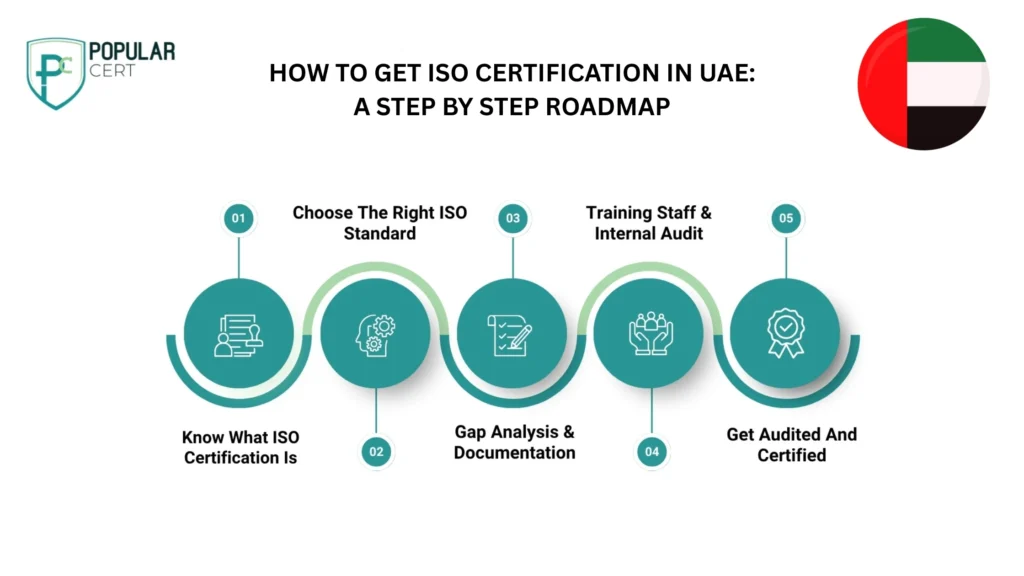
As with other management systems standards certification follows a prescribed process: a first gap analysis, the introduction of required processes and documentation, external audit, after that, an external audit done by a reputable certification body. Audits of surveillance, generally every year, verify that the environmental management system's proper maintenance rather than lapsing after the initial certification is issued.
Genuine Business Benefits Beyond the Certificate
Beyond the eligibility for tenders and regulatory clarity, businesses that implement ISO 14001 properly often uncover substantial savings from greater efficiency in waste and resource management. There are also benefits to reputation from increasingly eco-conscious clients and partners. The practical benefits are one aspect of the reason why environmental certification has moved well beyond a purely compliance-based exercise for a lot of UAE firms.
Assessing What's Actually Important
Implementing a well-designed ISO 14001 system focuses measurement efforts on the environmental issues that matter most to the specific company and not tracking indicators solely because they're easy to measure. An logistics company may focus on transportation efficiency and fuel consumption when compared to a manufacturing facility that may concentrate on water and waste generation depending on where each company's true environmental impact is.
Engaging Suppliers and Contractors
Many UAE firms have found that a significant portion of their environmental footprint is attributed to contractors and suppliers rather than directly with their own activities. ISO 14001 encourages businesses to think about this wider effect of supply chains, instead of making environmental management purely an internal matter. This has prompted certain certified UAE companies to start asking their main suppliers about environmentally friendly practices, which is causing gradually ripple effects through regional supply chains.
Emergency Preparedness is a Part of the Standard
ISO 14001 requires businesses to recognize potential environmental emergency situations pertinent to their activities, for example, chemical spills or breakdowns in equipment that have environmental effects and have effective emergency plans in place instead of addressing such emergency situations in a reactive way. This preparedness element often reveals holes that businesses had not previously thought of, especially in relation to staff education for emergency situations.
A Standard That Rewards Genuine Engagement
Ultimately, ISO 14001 rewards businesses that consider environmental management a genuine ongoing operational priority instead of a documenting exercise carried out once and discarded. UAE businesses that incorporate the principles of the standard into daily management decisions, rather that separating it in an additional compliance function tend to enjoy the most important environmental and public image benefits over time.
Water Management deserves special attention in the UAE Situation
Because of the harsh climate of the Middle East and dependence on desalinated drinking water in its use and management, water consumption is frequently a focus of an ISO 14001 system compared with regions where water shortage is less urgent. Businesses that incorporate water efficiency into their eco-management system from the outset tend to see this as one of the most beneficial aspects of ISO 14001 certification within the local situation.
For UAE businesses that meet the requirements of ISO 14001, the certification can be seen as a way to respond to legitimate regulatory and market pressure and a structured opportunity to control environmental impacts better, which increasingly is important to regulators, clients, and the UAE's own ambitions for sustainability across the country. Since environmental requirements across the UAE continue to increase businesses that are able to build real sustainable management of their environment now, rather than waiting for it to become an inevitable requirement, will stand out in the years ahead. It's not necessary to be daunting for smaller businesses, since the standard scales are proportional, and even small, genuine environmental improvements implemented consistently tend to satisfy auditors far more than a lofty plan that never follows through. Consistency, and not just ambition alone, is ultimately the main thing auditors and environment-friendly outcomes both reward. Small, sustained improvements tend to beat ambitious plans which gradually stall after the first few months. Have a look at the best ISO Certification UAE for site tips.